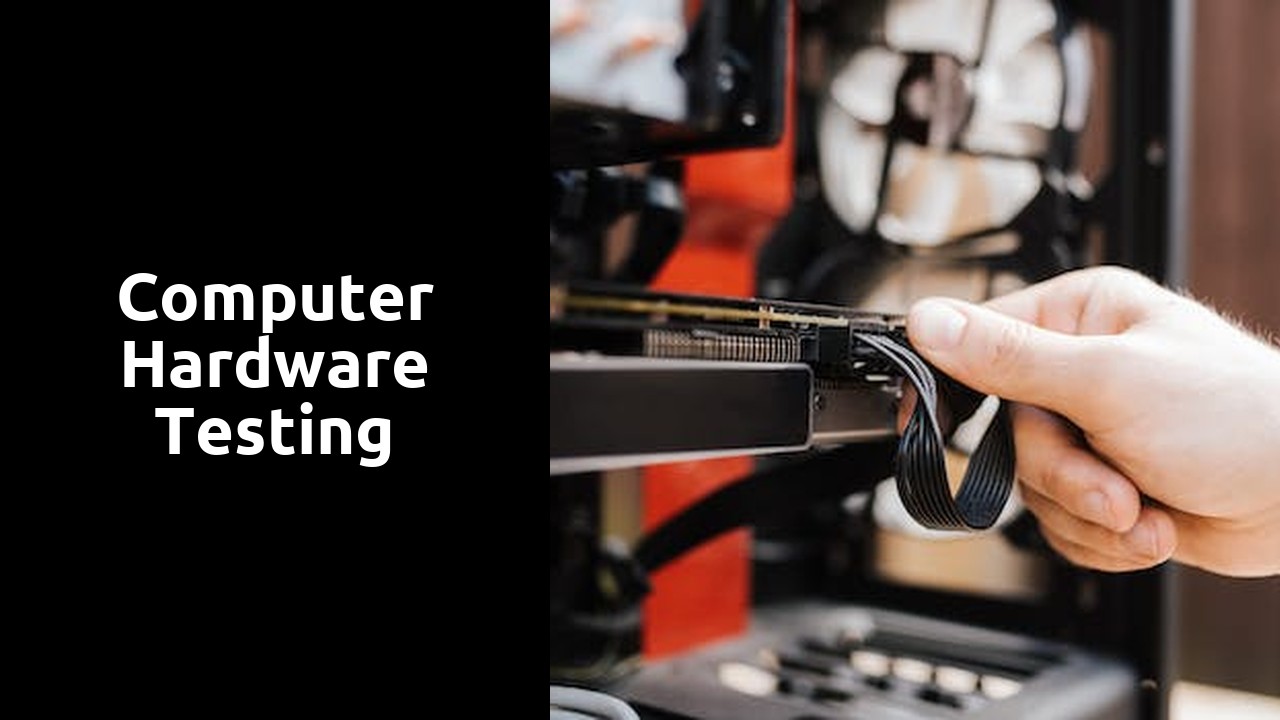
Computer hardware testing
The Importance of Stress Testing in Computer Hardware Evaluation
Stress testing plays a crucial role in the evaluation of computer hardware. This rigorous process involves subjecting the hardware to extreme conditions and demanding tasks to determine its performance limits and stability. By pushing the hardware to its maximum capacity, stress testing helps to identify any potential weaknesses or flaws that may arise in real-world scenarios.
One of the key advantages of stress testing is that it provides valuable insights into the overall reliability and durability of computer hardware. By simulating demanding workloads and intense usage scenarios, stress testing ensures that the hardware can withstand the rigors of everyday use without any issues. This helps manufacturers and consumers alike make informed decisions about the suitability and longevity of the hardware for their specific needs. Additionally, stress testing also aids in identifying any potential heating or cooling issues that may arise under extreme conditions, ensuring that the hardware can maintain optimal performance even when subjected to demanding tasks.
Understanding the Role of Benchmarking in Assessing Computer Hardware Performance
Benchmarking plays a crucial role in evaluating the performance of computer hardware. By comparing the performance of different hardware components or systems, benchmarking provides a standardized method to assess their capabilities. It involves running a set of tests or workloads on the hardware and measuring various performance metrics such as speed, power consumption, and efficiency. By quantifying these metrics, benchmarking allows for objective comparison and helps users make informed decisions about which hardware is best suited for their needs.
One of the primary benefits of benchmarking is its ability to identify performance bottlenecks. By stress-testing the hardware components, benchmarking can pinpoint weak areas that may hinder overall system performance. This information is particularly valuable for industries that heavily rely on high-performance computing, such as gaming or data analysis. Benchmarking allows users to identify the specific components that may need an upgrade or optimization, leading to better utilization of resources and improved system performance. Additionally, benchmarking also helps in setting realistic expectations by providing a standardized baseline for performance comparison.
Exploring Different Methods of Thermal Testing for Computer Components
Thermal testing plays a crucial role in evaluating the performance and reliability of computer components. By subjecting these components to extreme temperatures, engineers can measure their ability to dissipate heat effectively and maintain stable operating conditions. One commonly used method of thermal testing is temperature cycling, in which the component is repeatedly exposed to different temperature ranges. This helps mimic real-world scenarios and assess the component's thermal endurance over time. Another method is thermal imaging, which uses infrared cameras to visualize the distribution of heat within the component. This allows engineers to identify potential hotspots and make informed design optimizations. Overall, exploring different methods of thermal testing enables manufacturers to ensure that computer components can withstand the rigors of heat and deliver optimal performance under any demanding conditions.
In addition to temperature cycling and thermal imaging, a third method of thermal testing is heat chamber testing. This involves placing the component inside a controlled environment where temperature and humidity can be precisely adjusted. By subjecting the component to elevated temperatures for extended periods, the tester can evaluate its thermal stability and determine whether it operates within specified temperature limits. This method is particularly important for components that are expected to function in high-temperature environments or under heavy workloads. By exploring these and other methods of thermal testing, engineers can better understand how computer components handle heat and make informed decisions to enhance their performance and reliability.
Analyzing the Impact of Overclocking on Computer Hardware Stability
Overclocking, the practice of pushing computer hardware beyond its prescribed limits to achieve higher performance, has gained popularity among enthusiasts and gamers. However, it is crucial to understand the impact of overclocking on computer hardware stability. One of the immediate effects of overclocking is increased heat generation. When the processor or graphics card is pushed to work at higher frequencies, it requires more power, which in turn produces more heat. This increased heat can affect the performance and lifespan of various components, including the CPU, GPU, and system memory.
Moreover, overclocking can also lead to instability issues. By running the hardware at higher clock speeds, there is an increased risk of system crashes, freezes, and data corruption. These stability issues can occur due to insufficient power supply, inadequate cooling, or simply because the hardware is not designed to operate at the overclocked speed sustainably. It is important to note that overclocking is essentially pushing the hardware beyond its manufacturer's specifications, which can void warranties and increase the risk of hardware failure. Therefore, individuals considering overclocking should weigh the potential performance gains against the risks to ensure they have adequate cooling solutions and are prepared to accept the consequences of potential instability or shortening of the hardware's lifespan.
Investigating the Reliability and Durability of Computer Hardware through Longevity Testing
Longevity testing serves as a crucial aspect of investigating the reliability and durability of computer hardware. By subjecting different components to prolonged usage, manufacturers can assess their performance and evaluate their ability to withstand the test of time. This type of testing helps identify any potential weaknesses or vulnerabilities in the hardware, allowing for necessary improvements to be made before the product reaches the market.
During longevity testing, computer hardware is continuously operated under demanding conditions that simulate real-world usage scenarios. Components such as processors, hard drives, and memory modules are subjected to high temperatures, fluctuations in voltage, and repetitive tasks to determine their endurance and longevity. By conducting this thorough evaluation, manufacturers can gain valuable insights into how their hardware performs over extended periods, which is crucial for ensuring the reliability and durability of the products they produce.
The Significance of Compatibility Testing in Ensuring Smooth System Integration
Compatibility testing plays a crucial role in the realm of computer hardware evaluation, as it ensures the smooth integration of various system components. When different hardware components are assembled together to create a computer system, it is essential to verify their compatibility. This testing process aims to identify any potential issues that may arise due to incompatibility between different hardware elements, such as processors, motherboards, and graphics cards. By conducting compatibility testing, computer hardware evaluators can mitigate the risk of system failures, errors, or malfunctions that may occur if the hardware components are not compatible.
One of the primary objectives of compatibility testing is to ensure that all system components work harmoniously together without any conflicts. This testing method involves carefully examining the compatibility of hardware attributes such as communication protocols, power requirements, data transfer speeds, and physical dimensions. Testing for compatibility also extends to the software level, verifying that the operating system and other software applications can seamlessly interact with the hardware components. By undertaking comprehensive compatibility testing, it becomes possible to identify and address any potential issues before they escalate, thereby ensuring a smooth system integration process and enhancing overall system performance.