Who develops computer hardware?
Central Processing Unit (CPU)
The Central Processing Unit (CPU) is the brain of a computer system. It is responsible for executing instructions and performing calculations, making it an essential component for any computer. The CPU is comprised of multiple cores, each capable of carrying out independent tasks simultaneously. This allows for efficient multitasking and faster processing speeds. Additionally, the CPU contains a cache memory that stores frequently accessed data, reducing the need to fetch information from the computer's main memory. Overall, the CPU plays a critical role in the performance and functionality of a computer system.
One key aspect to consider when choosing a CPU is its clock speed, measured in gigahertz (GHz). This indicates the number of cycles the CPU can execute per second. A higher clock speed generally results in faster processing times. However, it is important to note that clock speed is not the sole determinant of performance. Factors such as cache size, number of cores, and architecture also contribute to the overall performance of the CPU. It is crucial to select a CPU that is well-suited for your specific needs, whether it be for gaming, multimedia editing, or general office tasks. By carefully considering these factors, you can ensure that your computer's CPU meets your requirements and delivers optimal performance.
Motherboard
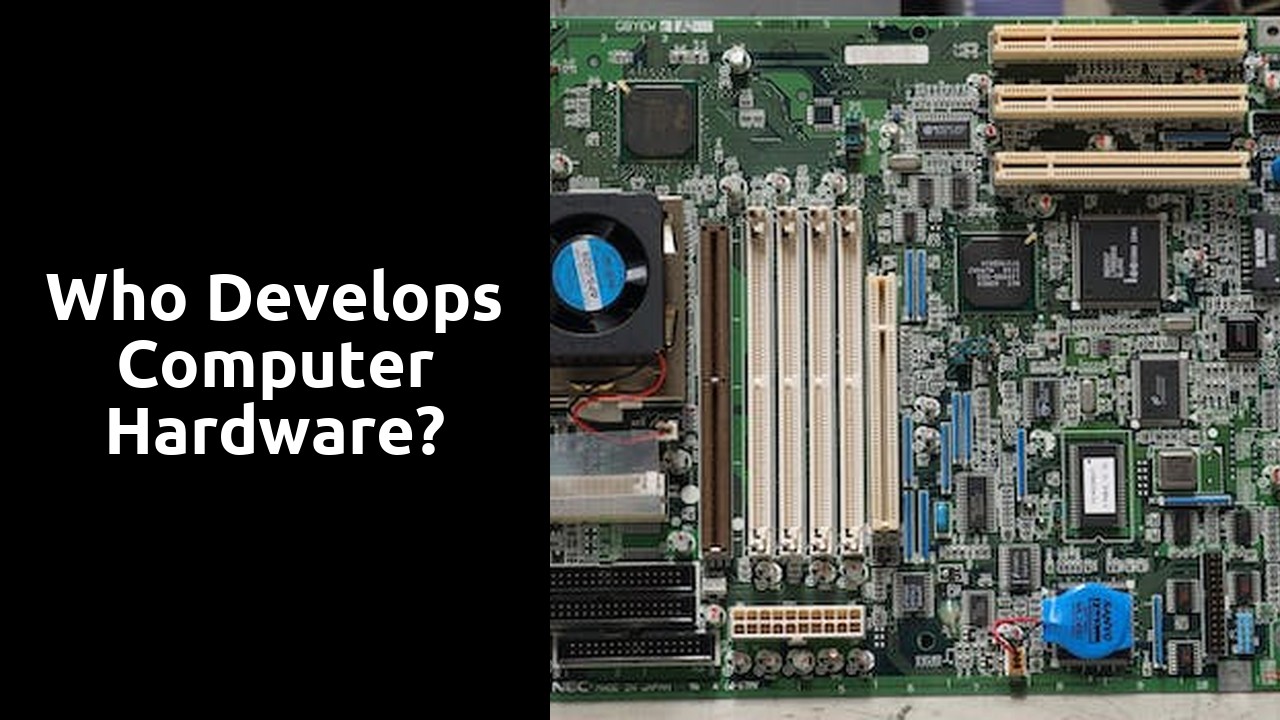
The motherboard is a pivotal component of any computer system. It acts as a central hub, connecting various components and allowing them to interact and communicate with each other. The motherboard provides the foundation for the entire system, determining which processors, memory, and expansion options are compatible. It houses the CPU socket, RAM slots, and expansion slots, as well as the necessary connectors for peripherals such as hard drives, graphics cards, and USB devices. In essence, the motherboard serves as the backbone of the computer, enabling all the other components to work seamlessly together.
One of the key factors to consider when choosing a motherboard is its form factor. This refers to the physical size and layout of the board, which has a direct impact on the overall design and compatibility of the system. Common form factors include ATX, Micro-ATX, and Mini-ITX, each catering to different needs and case sizes. Additionally, the motherboard's chipset is another vital consideration. The chipset determines the motherboard's capabilities and features, such as the number of USB ports, expansion slots, and supported technologies. Overall, the motherboard is a critical component that should be carefully selected to ensure optimal performance and compatibility in a computer system.
Random Access Memory (RAM)
Random Access Memory (RAM) plays a crucial role in the overall performance of a computer system. It is responsible for temporarily storing data that is actively being used by the CPU. Unlike other storage devices such as hard disk drives or solid-state drives, RAM provides much faster access to data, resulting in faster and smoother operations.
The size of RAM directly affects a computer's multitasking capabilities. Having more RAM allows the system to run multiple applications simultaneously without experiencing significant performance issues. When the RAM is filled, the computer starts using virtual memory, which is a portion of the hard disk that acts as an extension to RAM. However, accessing data from the hard disk is much slower than accessing it from RAM, leading to a noticeable decrease in performance. Therefore, having ample RAM is crucial, especially for users who frequently work with resource-intensive applications such as video editing software or 3D rendering programs.
Graphics Processing Unit (GPU)
A Graphics Processing Unit (GPU) is an essential component of a computer system, especially for those who engage in graphic-intensive tasks such as gaming or video editing. The primary function of a GPU is to render and display visuals on the monitor. Unlike the CPU, which handles general computing tasks, the GPU is specifically designed to handle complex calculations required for generating high-quality graphics. With its parallel processing architecture, the GPU can execute multiple tasks simultaneously, making it much faster and more efficient in handling graphics-related tasks.
Modern GPUs are equipped with dedicated memory known as Video RAM or VRAM. This specialized memory enables the GPU to store and access large amounts of data quickly, facilitating smoother and faster image rendering. Additionally, many GPUs now come with advanced features such as real-time ray tracing and artificial intelligence capabilities. These advancements not only enhance the visual quality of games and graphical applications but also enable new possibilities in terms of realistic lighting effects and virtual simulations. Thus, the GPU plays a pivotal role in delivering immersive and visually stunning experiences to users, making it a crucial component in modern computer systems.
Hard Disk Drive (HDD) and Solid State Drive (SSD)
One of the most critical components of a modern computer system is the storage drive, which is responsible for storing and accessing data. Two common types of storage drives are the Hard Disk Drive (HDD) and the Solid State Drive (SSD).
The Hard Disk Drive (HDD) has been a staple in computer systems for many years. It consists of a spinning magnetic disk and a mechanical arm that reads and writes data on the disk's surface. HDDs are known for their relatively large storage capacity and affordability. However, they are slower in terms of data access speeds compared to SSDs.
On the other hand, the Solid State Drive (SSD) is a newer and more advanced form of storage. Unlike HDDs, SSDs do not have any moving parts and instead use flash memory technology. This results in significantly faster data transfer rates and improved system performance overall. SSDs are also more durable and resistant to shock, making them ideal for portable devices. However, they tend to have a higher price per gigabyte compared to HDDs.
Power Supply Unit (PSU)
Power Supply Unit (PSU) is an integral component of any computer system, providing the necessary power to all the other hardware components. Its primary function is to convert the alternating current (AC) from the power outlet into direct current (DC) that is required by various computer parts. By regulating the voltage and ensuring a steady flow of power, the PSU prevents any potential damage that could occur due to power surges or fluctuations. It also features various connectors to provide power to the motherboard, CPU, graphics card, hard drives, and other peripherals.
Choosing the right PSU is crucial to ensure the stability and efficiency of a computer system. It is important to consider the power requirements of all the components while selecting a suitable PSU. Overloading the PSU can result in system instability and potential damage. A high-quality PSU not only provides sufficient power to all the components but also offers protection against short circuits and overloads. Additionally, it should have ample connectivity options and comply with power efficiency standards to reduce energy consumption. Overall, the PSU plays a vital role in the proper functioning and longevity of a computer system.
FAQ
What is computer hardware?
Computer hardware refers to the physical components that make up a computer system, including the central processing unit (CPU), motherboard, memory, graphics card, storage devices, and power supply.
Who develops computer hardware?
Computer hardware is developed by various companies and manufacturers specializing in different components. Some well-known hardware developers include Intel, AMD, NVIDI
What role do CPU manufacturers play in developing computer hardware?
CPU manufacturers, such as Intel and AMD, design and develop the central processing units, which are the brains of the computer. They focus on improving performance, efficiency, and compatibility with software.
Who is responsible for developing motherboards?
Motherboards are typically developed by companies like Asus, Gigabyte, MSI, and ASRock, among others. These manufacturers design and produce motherboards that provide the necessary connectivity and compatibility for various hardware components.
Which companies are involved in developing RAM?
RAM (Random Access Memory) modules are developed by companies like Kingston, Corsair, Crucial, Samsung, and G.Skill, to name a few. They design and manufacture different types and capacities of RAM for use in computers.
Who develops graphics cards for computers?
Graphics cards, also known as GPUs (Graphics Processing Units), are developed by companies like NVIDI
What companies develop storage devices like hard disk drives (HDD) and solid-state drives (SSD)?
Companies such as Western Digital, Seagate, Toshiba, Samsung, and Crucial are involved in developing HDDs and SSDs. They work on improving storage capacities, read/write speeds, durability, and reliability of these devices.
Who is responsible for developing power supply units (PSUs)?
Companies like Corsair, EVG
Are there any collaborative efforts involved in computer hardware development?
Yes, there are collaborations and partnerships between various hardware developers. For example, CPU manufacturers collaborate with motherboard manufacturers to ensure compatibility and optimize performance. Similarly, GPU manufacturers work with game developers to optimize their hardware for specific gaming titles.
How can I stay updated on the latest advancements in computer hardware development?
To stay informed about the latest developments in computer hardware, you can follow technology news websites, subscribe to hardware-focused magazines, join online communities and forums, and follow the social media channels of hardware manufacturers. This way, you can keep up to date with new releases, technological advancements, and industry trends.